

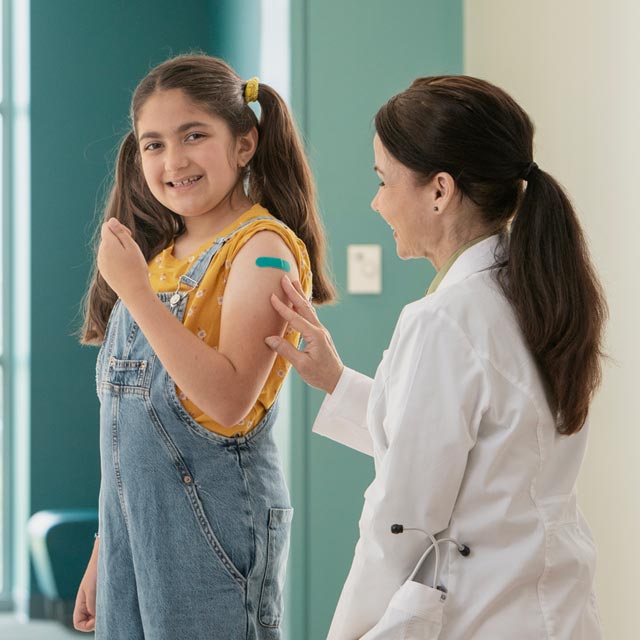
If your child is afraid of vaccines, there are many ways you can make the vaccine appointment a more positive experience. Common ways to support your child if they are afraid of vaccines are:source: 1
- Talking to your child in a positive manner
- Reassuring them
- Helping them feel more comfortable.
- Making vaccination a positive experience by doing something they love afterwards. It can be as simple as going to their favorite park or getting an ice cream cone.
Key Tips
- Be aware of how you are talking about the vaccine and their fear of vaccinations. Use words that explain what your child will feel in their body when they get a vaccine—like “pressure” or “pinch” instead of “pain,” and “immunization” or “vaccine” instead of “shot” or “needle.”source: 1
- Let them know you understand their worries, but you know they are strong and courageous. This helps your child feel understood and empowers them at the same time. Telling your child that it is “not a big deal” can make them feel like you don’t care.source: 1,source: 2
- Explain how getting a vaccine will improve their life and keep them safe. For example, they won’t have to miss play dates because they are sick with the chickenpox. Talk about a vaccine helping their immune system be a superhero. Your child wants to be your superhero!source: 2
- Share how getting a vaccine keeps their friends and family healthy. Children are often selfless, so pointing out that they are doing good for their grandparents, their siblings, or their community can be powerful, too.source: 2

Tips for making your child more comfortable
- If your child likes being held, hold them and remind them to try their best to sit still. Let your child feel comforted by your touch and closeness.source: 3,source: 4
- Creams, patches, or cooling sprays can reduce pain. When you check in for your child’s appointment, ask if there are any numbing creams or sprays the doctor can use with your child. Or contact your child’s doctor’s office before the appointment to ask.source: 1,source: 5
- Direct your child’s attention away from anxiety and pain. Tell a story, read a book, sing a song, or watch a funny video.source: 1
- Have your child take deep breaths, then “blow out” the pain like they are blowing out candles. This action engages their brain, so they don’t notice the vaccine.source: 1

A Deeper Dive: If your child needs extra support
Did you know that as many as two out of three children are afraid of needles?source: 5,source: 6 And yet, most children are up to date on vaccines. This means many other parents are looking for and have found ways to help their child have a positive vaccine experience.
If your child needs more support with anxiety about vaccines, consider talking to a mental health professional or a child life specialist. They can help give you strategies to support your child.source: 5,source: 6
More information
- American Academy of Pediatrics: Taking Fear and Pain Out of Needles — for Your Child and You
- Children’s Hospital of Orange County: Kids and the fear of needles: What parents should know
Still have questions? Talk to your child’s doctor, nurse, or pharmacist.
Resources
Ten ways to separate fact from fiction
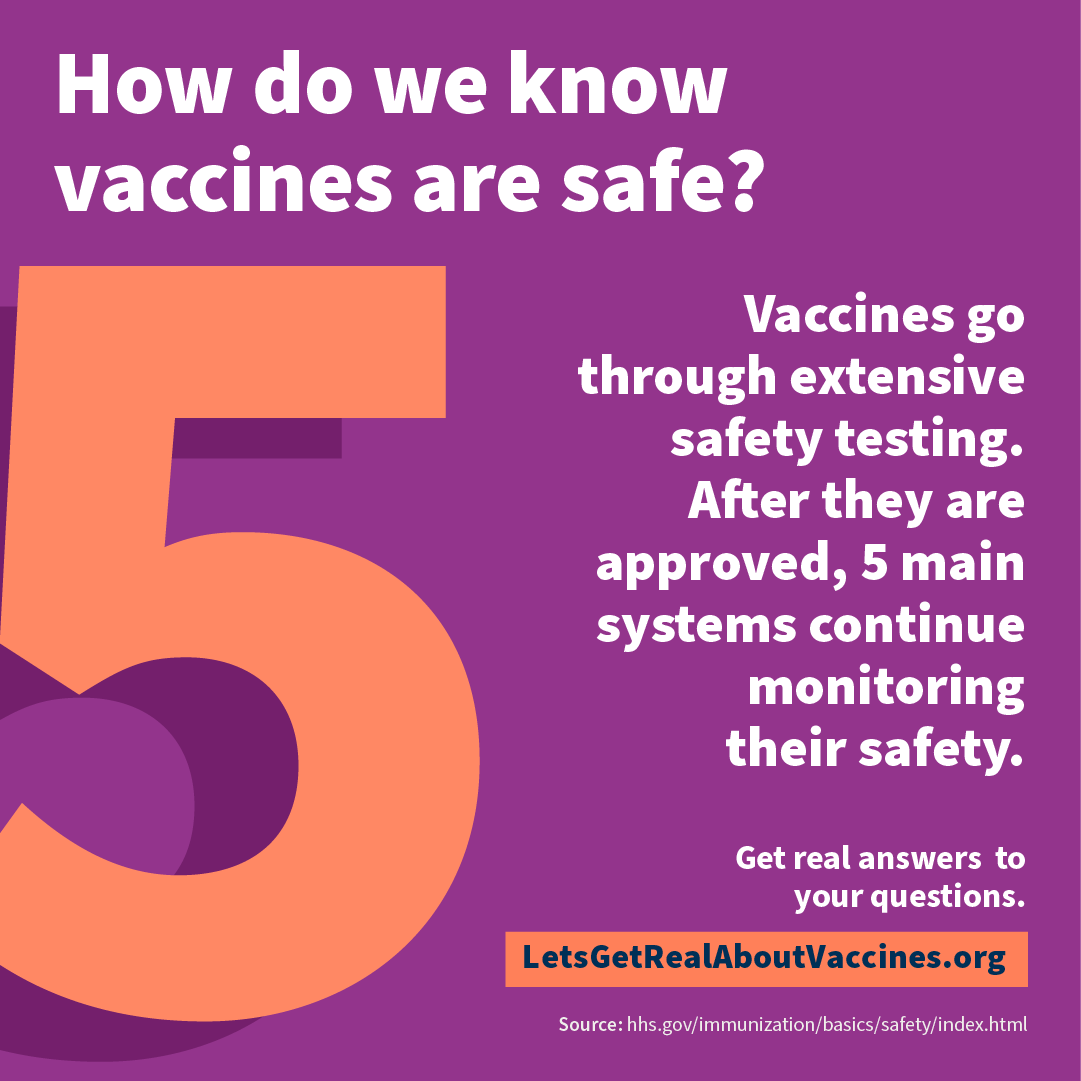
How do we know vaccines are safe?
Explaining vaccines to children
Sources
- CDC: Make Shots Less Stressful
- Public Broadcasting Service (PBS): How to Talk to Your Child About Vaccines
- Children’s Healthcare of Atlanta: Parents: Helping Your Child or Teen Overcome Fear of Shots
- CDC: Before, During, and After Shots
- American Academy of Pediatrics: Taking Fear and Pain Out of Needles—for Your Child and You
- CDC: Healthcare Providers: Understanding Needle Fears and Phobia